Qwen3.8 Max Preview: Release, Access, and Open Weights
Qwen3.8 Max Preview is live through the Alibaba Token Plan and Qoder. Here is what is confirmed about access, benchmarks, open weights, and the 2.4T claim.
Qwen3.8 Max Preview is real and usable, but it is not yet a fully documented model release. Alibaba added Qwen3.8-Max-Preview to its AI Token Plan, and the Qwen team says the preview is also available in Qoder and QoderWork. What Alibaba has not published matters just as much: there is no benchmark table, model card, stable standalone API price, context-window specification, license, or downloadable weight file as of July 20, 2026.
Alibaba calls the 2.4-trillion-parameter preview its strongest Qwen and says it is “second only to Claude Fable 5.” Both are Alibaba claims, not independent findings. The honest launch-day answer is therefore narrower than the headline: Qwen3.8 is a testable preview with an unusually large claimed architecture and an open-weight release promised for later, not yet a measured replacement for Claude, Kimi, or Qwen3.7 Max.
Is Qwen3.8 out yet?
Yes, as a preview inside specific Alibaba products. No, if “out” means a normal model launch with a stable API page, rate card, technical documentation, model card, and weights that anyone can download.
The cleanest primary evidence is Alibaba Cloud’s live Token Plan page. It names Qwen3.8-Max-Preview in both the page introduction and the supported-model list, alongside Qwen3.7 Max, GLM-5.2, and DeepSeek V4 Pro. That is stronger evidence than a leaked model identifier or an anonymous pre-release claim: Alibaba is selling access to a product that names the model.
The rest of the access picture comes from Alibaba’s official Qwen announcement on X, which says the preview debuted in Token Plan, Qoder, and QoderWork. The post is independently described by both the South China Morning Post and SiliconANGLE. Neither report points to a normal Model Studio API documentation page for Qwen3.8, and Alibaba’s public model-pricing documentation still stops at the earlier Qwen line. So access is confirmed; general API availability and per-token pricing are not.
This distinction matters because “available” gets used for three different events in AI launches:
- A model appears in a first-party app or subscription.
- A stable API model ID and rate card let developers build against it.
- A weight repository and license let anyone run it on their own infrastructure.
Qwen3.8 has reached the first stage. Alibaba says the third is coming. The second is not documented clearly enough to budget a production workload around it.
What is actually confirmed about Qwen3.8?
The launch has one unusually solid fact, product availability, and a large ring of claims waiting for documentation. Here is the evidence state as of July 20.
| Detail | Current evidence | What it means |
|---|---|---|
| Model name | Qwen3.8-Max-Preview on Alibaba’s Token Plan page |
Confirmed first-party preview |
| Launch timing | Announced July 19 during the World Artificial Intelligence Conference | Confirmed by two launch reports citing Alibaba |
| Access | Token Plan confirmed by Alibaba; Qoder and QoderWork named in its announcement | Testable in selected Alibaba products |
| Total parameters | 2.4 trillion | Alibaba-reported; no model card yet |
| Active parameters | Not published | Inference compute cannot be estimated |
| Context window | Not published at launch; 1M measured by Artificial Analysis on August 7 | Confirmed independently, still not documented |
| Modalities | Multimodal capability reported by launch coverage | Awaiting first-party model documentation |
| Benchmark scores | Intelligence Index 58, Artificial Analysis, August 7 | Ninth of 185, not “second only” |
| API price | $2/$6 per Mtok announced August 3, measured on a live endpoint August 7 | Still absent from Alibaba’s own rate card |
| Open weights | Promised for the week of August 10 | No repository, files, or license as of August 7 |
Calling this an evidence gap is not pedantry. A mixture-of-experts model can have trillions of total parameters while activating only a small fraction for each token. Total size helps describe storage and training scale; the active count is closer to the compute required at inference. Without both, “2.4T” says very little about speed, serving cost, or the hardware needed to self-host it.
The same caution applies to context length and modalities. Qwen3.7 Max has a documented 1-million-token context window, and Alibaba has shipped vision-language Qwen models before. That history makes a long-context multimodal Qwen3.8 plausible. It does not make those specifications confirmed. Product generations frequently change limits between preview and general availability.
Is Qwen3.8 really second only to Claude Fable 5?
There is no public evidence strong enough to answer yes. Alibaba says Qwen3.8 is comparable to leading frontier systems and “second only to Fable 5,” but it did not publish the leaderboard, benchmark suite, scores, harness, competitor settings, or number of runs behind that ranking.
That makes the sentence positioning, not measurement. It may later prove directionally correct, but readers cannot reproduce it today. A benchmark claim becomes useful only when it names the test, discloses the conditions, and gives rivals the same opportunity to be measured.
The omission is especially noticeable because the prior model arrived with far more evidence. Qwen3.7 Max shipped with named coding and agent evaluations, and it now has independent results tracked in our cost-per-task tracker and AI model value leaderboard. Those numbers carry their own caveats, but at least they can be inspected and challenged. Qwen3.8 currently offers only the conclusion.
The first useful independent signal arrived on August 7, 2026, from the evaluator named here as the likeliest source: Artificial Analysis scored Qwen3.8 Max at Intelligence Index 58, ninth of 185 models. That is a real generational gain over Qwen3.7 Max at 47, and it is nowhere near second place, which sits at 62 and 63 for Claude Fable 5 and Claude Opus 5. The cost of running that evaluation rose 64 percent against Qwen3.7 Max. The current model tracker now carries Qwen3.8-Max at preview status on the strength of that measurement rather than on the launch claim.
How to access Qwen3.8 Max Preview
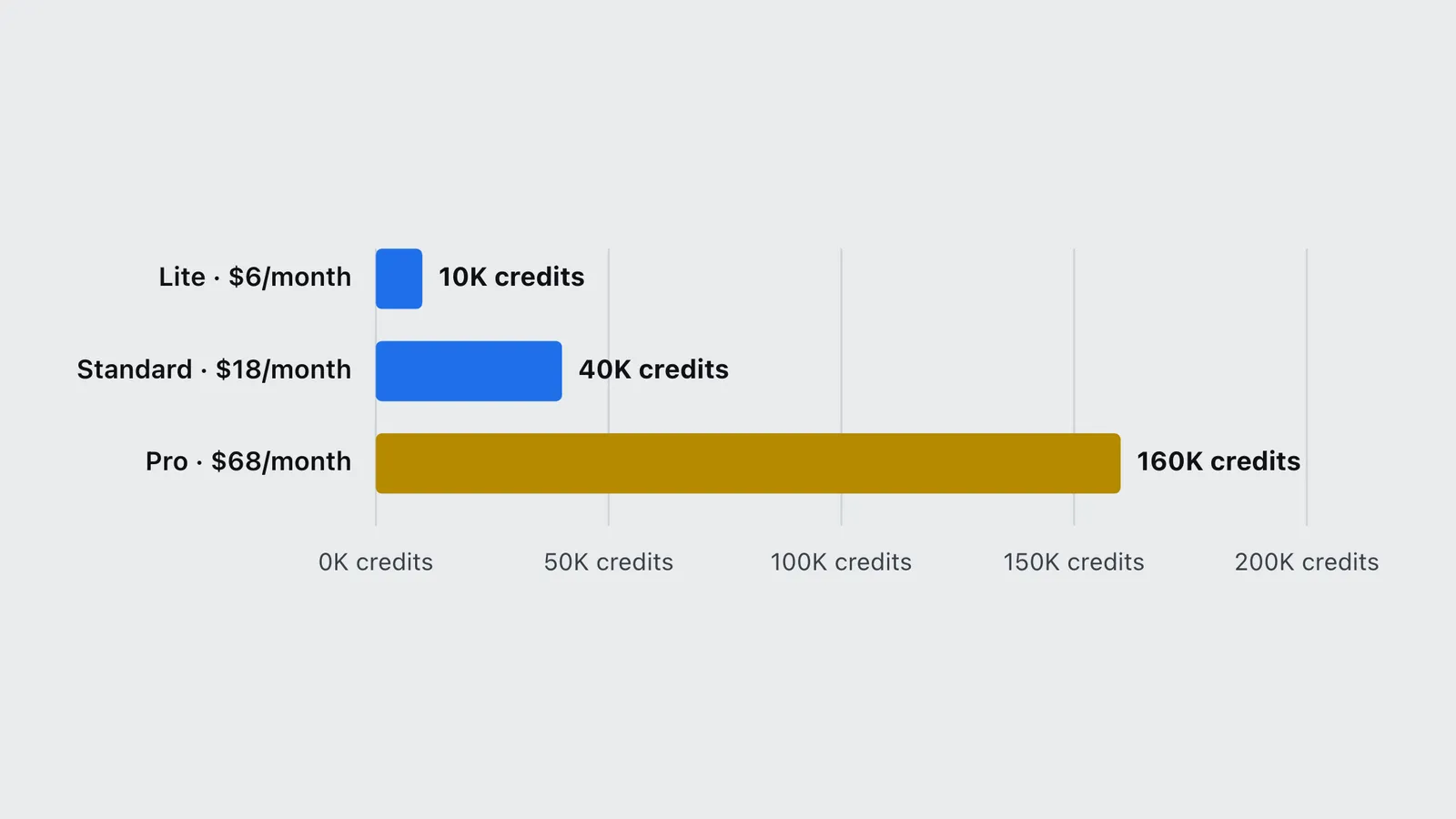
The verified route is Alibaba Cloud’s AI Token Plan. The individual plan currently has three tiers: Lite at a promotional $6 per month with about 10,000 credits, Standard at $18 with about 40,000 credits, and Pro at $68 with about 160,000 credits. Alibaba lists Qwen3.8 Max Preview among the models available in the plan.
| Item | Value |
|---|---|
| Lite · $6/month | 10K credits |
| Standard · $18/month | 40K credits |
| Pro · $68/month | 160K credits |
The credit system prevents a clean cost-per-million-token calculation. Alibaba does not state on that page how many Qwen3.8 input or output tokens one credit buys, and the same balance also covers image, video, and audio tools. Treat the plan price as the cost of preview access, not the model’s API rate.
Qoder and QoderWork are the other announced surfaces. They are agentic development products, so this route is most relevant to people evaluating Qwen3.8 for code generation and software tasks. The announcement does not establish that every Qoder plan, region, or account has identical availability. Check the model picker before buying access solely for Qwen3.8.
SiliconANGLE reports that preview usage is priced at 10% of the standard rate during the trial period. Alibaba’s public Token Plan page does not expose a Qwen3.8 standard rate from which to reproduce that discount, so the safer budget is the visible subscription price. A percentage with no published denominator is not a rate card.
Qwen3.8 versus Qwen3.7 Max and Kimi K3
The nearest comparisons show why Qwen3.8 is interesting and why it is too early to rank.
| Model | Release state | Claimed total size | Public API price | Independent Intelligence Index | Open weights |
|---|---|---|---|---|---|
| Qwen3.8 Max | Priced, docs still absent | 2.4T | $2 input / $6 output per Mtok | 58 | Promised, week of Aug 10 |
| Qwen3.7 Max | Stable API model | More than 1T | $2.50 input / $7.50 output per Mtok | 47 | No |
| Kimi K3 | API release | About 2.8T | $3 input / $15 output per Mtok | 60 | Shipped |
Index values read from Artificial Analysis on August 7, 2026, all on the same day so they can be compared with each other. None of those numbers existed when this section was first written on July 20.
Qwen3.7 Max is the practical baseline. It has documented rates, a stable endpoint, a 1M-token context window, and enough evaluation data to estimate the trade between capability and cost. If you need to deploy a Qwen model this week, those boring details make Qwen3.7 the safer choice even if Qwen3.8 eventually proves much stronger.
Kimi K3 is the scale comparison. Moonshot’s new flagship is reported at about 2.8 trillion parameters and arrived with API pricing, a specification table, vendor benchmarks, and several independent reads. The Kimi K3 pricing and benchmark explainer separates those measurements from Moonshot’s claims. The contrast held for three weeks: Kimi K3 shipped its weights and kept a higher independent score, while Qwen3.8 arrived with a claim first and a measurement three weeks later.
None of this means Qwen3.8 is weaker. It means the evidence is weaker. Ranking models by the completeness of their launch material would be silly; choosing a production dependency based on missing material would be worse.
Are Qwen3.8 open weights available?
No. On August 3 Alibaba narrowed “coming soon” to about one week, which points at the week of August 10, and added a smaller Qwen3.8-27B to the planned release. Neither has appeared: there is no official Qwen3.8 model repository on the Qwen Hugging Face organization, no downloadable checkpoint, no model card, no file sizes, and no license as of August 7, 2026. Artificial Analysis, which has now benchmarked the model, classifies it as proprietary.
“Open weights soon” is a commitment about a future release, not the current preview’s license. The distinction determines what developers can actually do:
- A hosted preview lets you send requests through Alibaba’s products under their service terms.
- An open-weight release lets you download the parameters and run the model elsewhere, subject to its license.
- Open source would additionally describe the training code and broader development artifacts, which model launches rarely provide in full.
Qwen has a strong history of publishing downloadable models, so the promise is credible. The exact terms still matter. A permissive Apache 2.0 release would support broad commercial use; a custom community license could add attribution, scale, or use restrictions. The guide to the best open-weight models treats a model as available only when the files and license exist, and Qwen3.8 has not crossed that line yet.
Should you use Qwen3.8 now?
Use the preview if your goal is evaluation. A short trial can answer questions the announcement cannot: whether the model follows a coding harness reliably, how often it loops, whether its visual understanding works on your documents, and how it compares with Qwen3.7 on the tasks you actually run.
Do not migrate a production system yet. The preview label means behavior can change, and the missing rate card makes unit economics impossible to forecast. There is also no public documentation for context limits, throughput, regional routing, retention, or deprecation policy specific to Qwen3.8. Those are operational requirements, not paperwork.
A sensible evaluation looks like this:
- Run a fixed, non-sensitive task set through Qwen3.8 and the model you use today.
- Score completed work, not how impressive the first answer sounds.
- Record latency, retries, failures, and credits consumed.
- Keep the preview out of automated production routing.
- Repeat the test after Alibaba publishes the final model, because preview behavior may not carry over.
For coding teams, include repository-scale tasks and review the resulting diff rather than relying on a chat impression. The wider AI coding-agent landscape explains why the harness and tool loop can change results as much as the model itself.
Bottom line
Qwen3.8 Max Preview is a real Alibaba preview with confirmed Token Plan access, a claimed 2.4-trillion-parameter architecture, and a promise of open weights. It is not yet a documented frontier-model release. Alibaba’s “second only to Claude Fable 5” line had no public benchmark table behind it, and the missing API price, active parameter count, context window, model card, and license prevented a serious deployment decision.
The right move was to test it without treating it as settled. Two of the three conditions set out here have since been met: pricing landed on August 3, and independent results landed on August 7. They did not support the launch claim. Artificial Analysis put Qwen3.8 Max ninth of 185 models rather than second, and the cost of running its evaluation suite rose 64 percent against Qwen3.7 Max even though the token price fell. The third condition, a weight repository and a license, is still outstanding.
Frequently asked questions
- Is Qwen3.8 released?
- Qwen3.8 Max Preview is available through Alibaba Cloud Token Plan and, according to Alibaba, through Qoder and QoderWork. A fully documented general API and open-weight release have not arrived yet.
- Is Qwen3.8 open source?
- Not yet. Alibaba narrowed the timeline on August 3, 2026 to about one week, pointing at the week of August 10, and added a smaller Qwen3.8-27B to the planned release. As of August 7, 2026 there is still no official Qwen3.8 repository, downloadable checkpoint, model card, or license, and Artificial Analysis classifies the model as proprietary.
- How can I access Qwen3.8 Max Preview?
- The verified route is Alibaba Cloud's AI Token Plan, which lists Qwen3.8 Max Preview as a supported model. Alibaba also names its Qoder and QoderWork agentic-development products as preview surfaces.
- Does Qwen3.8 have 2.4 trillion parameters?
- Alibaba says Qwen3.8 has 2.4 trillion total parameters. No technical report or model card has independently confirmed that figure or disclosed how many parameters are active for each token.
- Is Qwen3.8 better than Claude Fable 5?
- No, on the one independent composite available. Artificial Analysis scored Qwen3.8 Max at Intelligence Index 58 on August 7, 2026 against 62 for Claude Fable 5 in its fallback configuration and 63 for Claude Opus 5. Alibaba called Qwen3.8 second only to Claude Fable 5 and published no benchmark scores or methodology to support it; the independent read puts it ninth of 185 models.
Sources and verification
- Alibaba Cloud. AI Token Plan. Preview availability, supported-model list, subscription prices, credits, and concurrency. Verified July 20, 2026.
- Qwen Team. Qwen3.8 Max Preview announcement. Availability, parameter count, positioning, and open-weight intent. Published July 19, 2026.
- South China Morning Post. Alibaba says newest Qwen AI model is second only to Anthropic’s Claude Fable 5. Published July 19, 2026.
- SiliconANGLE. Alibaba previews Qwen3.8, claims it is second only to Claude Fable 5. Published July 19, 2026.
- Qwen Team. Qwen3.8-Max pricing and open-weights announcement. The $2/$6 per Mtok rate and the one-week open-weights timeline. Published August 3, 2026.
- Artificial Analysis. Qwen3.8 Max: Intelligence, Performance and Price Analysis. Independent benchmark: Intelligence Index 58, rank 9 of 185, 1M context, proprietary status, and the measured $2/$6 endpoint rate. Verified August 7, 2026.
- Artificial Analysis. LLM leaderboard. The same-day Intelligence Index values used in the comparison table above, including Qwen3.7 Max at 47, Kimi K3 at 60, Claude Fable 5 at 62 and Claude Opus 5 at 63. Verified August 7, 2026.