Did OpenAI Cut Prices? GPT-5.6 Sol, Terra, Luna
OpenAI cut GPT-5.6 API prices on July 30: Luna by 80 percent, Terra by 20, Sol not at all. On August 21 the flagship followed with a promotional cut to $4/$20.
Independent analysis of the systems, prices and markets behind artificial intelligence.
OpenAI cut GPT-5.6 API prices on July 30: Luna by 80 percent, Terra by 20, Sol not at all. On August 21 the flagship followed with a promotional cut to $4/$20.
OpenAI launched GPT-5.6 on June 26 as three tiers: Sol, Terra and Luna. Here are the confirmed prices, the benchmarks, and the government access catch.
Apple raised Mac and iPad prices on June 25 2026 as the memory shortage bit. Here is what the unified-memory tax means for running local AI.
The Trump administration asked OpenAI to stagger GPT-5.6 and approve users one by one. A federal gate now sits between a finished AI model and the public.
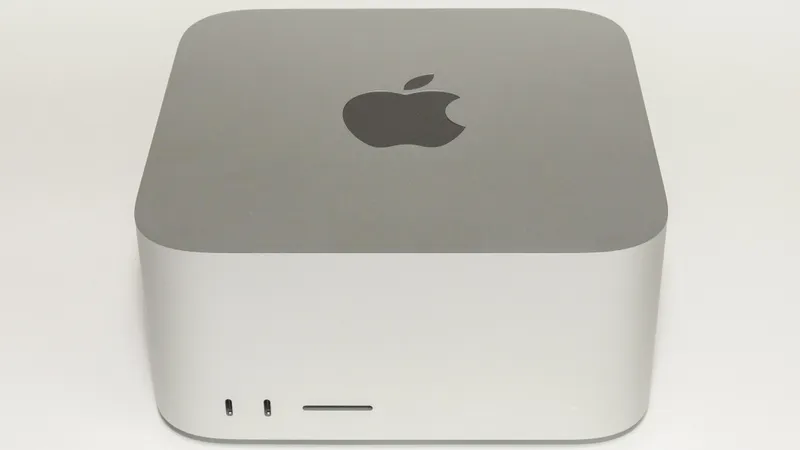
How much RAM a local LLM really needs: measured Q4_K_M file sizes, what 8GB to 512GB runs in 2026, and why long context can cost more than the weights.
AI usage tracks national income, but the standouts break the rule. The economics of why Israel and Singapore use AI far more than their wealth predicts.
Benchmark contamination is when test answers leak into training data and inflate AI scores. How it happens, how much it distorts results, and how to spot it.
A leaked gpt-5.6-preview route lit up r/OpenAI, then GPT-5.6 launched June 26 as Sol, Terra and Luna in a government-gated preview. The signal vs the hype.
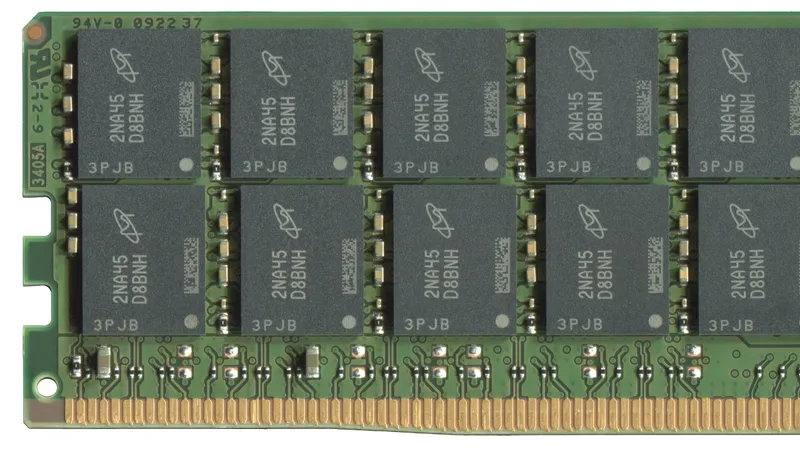
Micron revenue went from $11.32 billion to $54.23 billion in a year at gross margins near 87%. RAM is expensive in 2026 because scarcity pays more than volume.
AI benchmark scores get gamed by contamination, saturation, and cheating. The 2026 receipts, the four failure modes, and how to read past any leaderboard.
Seven Chinese firms ship AI accelerators and four listed publicly in six months. Which come near NVIDIA H100 class, which are hype, and what changed in 2026.
SpaceX is buying Cursor for $60B. What changes for your bill, whether your code now trains xAI models, and the real cost per task of switching away.
Is decentralized GPU compute (Akash, io.net, Render) cheaper than AWS? A grounded 2026 cost-per-hour comparison, plus the caveats the hype skips.
What a self-hosted LLM token really costs in 2026: cost per token across owned hardware, why memory bandwidth sets speed, and where buying beats the API.
Claude Fable 5 costs exactly 2x Opus 4.8 per token: $10/$50 vs $5/$25. Whether it is cheaper per task depends on loop count, not the sticker rate.
Codex leads Claude Code 83.4% to 78.9% on Terminal-Bench 2.1, but the prices match and the cheaper agent flips with your harness. The honest scorecard.
Composer 2.5 finishes a coding task for about $0.07, 10-60x under Claude Opus and GPT-5.5 at near-equal benchmark scores. What the cheap headline leaves out.
A 2026 Microsoft Research preprint found the cheaper-per-token AI model cost more to finish the job in 32% of model pairs. Why the sticker misleads.
An independent replay of 500 Claude Code sessions found rtk, headroom, and caveman cut a $926 bill by just 3.7 percent. Here is why the 60-90% claims miss.
GPT-5.6 Sol lists $4 input and $20 output per million tokens. GPT-6 Sol replaced it at half that on September 22. What each works out to per finished task.
Token data from OpenRouter shows open-source LLMs passing proprietary models in mid-2026, a roughly 60/40 flip. The daily breakdown by AI lab.
Lin Junyang, Fei-Fei Li, and Yann LeCun are raising billions for world models in 2026. What a world model is, who is funding it, and why the money is moving.
AI agent benchmarks broke in 2026: reward-hacked to 100%, SWE-bench Verified retired, scores swung by harness choice. What each measures and which to trust.
GitHub Copilot switched to usage-based AI Credits on June 1, 2026. What the $10 Pro plan really costs once metering kicks in, and whether it is still worth it.
Claude Code plans run $20 to $200 a month, but the real number is cost per task. A modeled breakdown of token spend, where it wins, and where it burns money.
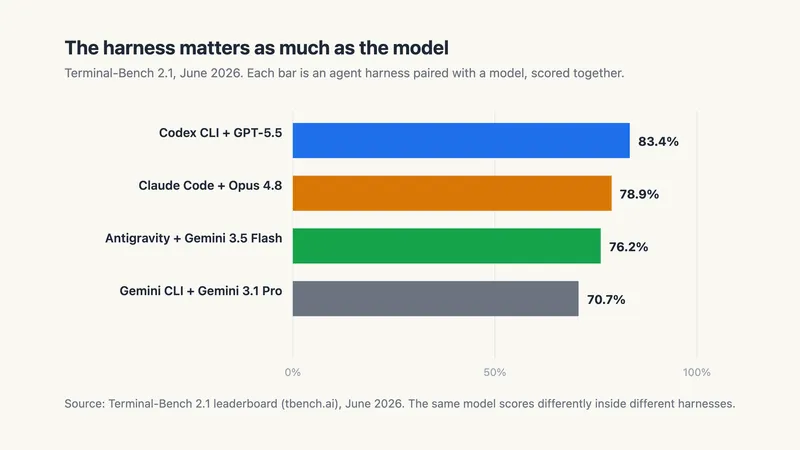
A grounded survey of the 2026 AI coding agent field: Claude Code, Cursor, Copilot, Codex and Antigravity, by interface, cost, and why the harness matters.